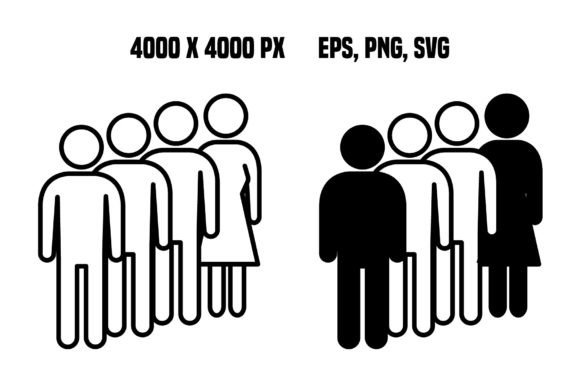
Queue Icons: Streamlining Visual Communication with Vector People Graphics
In the rapidly evolving landscape of digital design, the ability to convey complex information through simple, intuitive visuals is paramount. Among the myriad tools available to designers and content creators, iconography stands out as a critical component of user interface (UI) and user experience (UX) strategy. Specifically, Queue Icons have emerged as a specialized subset of visual assets designed to represent waiting lines, service flows, and human interaction in organized sequences. When paired with high-quality resources like the "Hi, welcome to the store" vector people icons, these elements transform abstract concepts into tangible, relatable graphics that resonate with audiences across various platforms.
The modern web demands clarity. Whether a visitor is navigating an e-commerce checkout process, waiting for a support ticket to be resolved, or simply browsing a menu at a digital kiosk, the visual cues they encounter dictate their perception of efficiency and professionalism. This article explores the multifaceted utility of Queue Icons, examining how high-resolution vector formats empower professionals, educators, and business owners to create more effective digital environments.
The Anatomy of Effective Iconography in Web Design
Before diving into specific applications, it is essential to understand what makes a set of icons truly functional. The difference between a generic clip-art image and a professional-grade asset often lies in scalability, resolution, and semantic relevance. The "Hi, welcome to the store" collection, which includes Vector people icons for web design, exemplifies the standards required for contemporary projects. These assets are not merely decorative; they are engineered to perform.
At the core of this utility is the file format. The inclusion of EPS, PNG, and SVG files ensures versatility across different media types. Scalable Vector Graphics (SVG) allow for infinite scaling without loss of quality, making them ideal for responsive web designs where images must adapt to screens ranging from smartwatches to large desktop monitors. Meanwhile, EPS files provide the flexibility needed for print production, ensuring that marketing materials maintain crisp edges even when blown up to billboard size. The provision of high-resolution PNGs at 300 dpi serves as a robust fallback for systems that do not natively support vector rendering, guaranteeing that the visual integrity remains intact regardless of the technical environment.
Furthermore, the resolution specifications of 4000 x 4000 pixels represent a significant leap forward in asset quality. In an era where 4K displays are becoming the norm, lower-resolution images can appear pixelated or blurry, detracting from the overall polish of a website or application. By utilizing assets with such high fidelity, designers ensure that every line and curve of the Queue Icons renders perfectly, contributing to a premium user experience.
Navigating User Flows with Visual Cues
One of the most practical applications of these graphics is in the visualization of user workflows. In customer service scenarios, e-commerce checkouts, and appointment booking systems, users frequently find themselves in a state of waiting. This "queue" state can induce anxiety or frustration if not managed correctly. Here, Queue Icons play a pivotal role in managing expectations and reducing cognitive load.
Consider a scenario where a customer is placing an order on a busy retail site. A static loading spinner might indicate activity, but it does not explain the process. However, a sequence of vector people icons illustrating a queue—showing a person arriving, waiting, being served, and leaving—provides a narrative context. It tells the user exactly where they stand in the process. The "Hi, welcome to the store" theme within the vector pack offers a friendly, welcoming tone that softens the potentially stressful experience of waiting. Instead of feeling ignored, the user feels acknowledged by the visual language of the interface.
For educators and researchers, these icons serve as excellent tools for diagramming processes. When explaining supply chain logistics, patient flow in healthcare facilities, or classroom management strategies, a clear visual representation of a queue can simplify complex theoretical models. The transparency of the background in these vector files allows them to be overlaid onto diagrams, charts, and presentations without obscuring underlying data, facilitating clearer communication of ideas.
Technical Advantages of High-Resolution Vector Assets
The technical specifications of the provided ZIP file are not just marketing buzzwords; they are critical enablers for professional workflows. The combination of 300 dpi resolution and 4000 x 4000 pixel dimensions addresses several common pain points in graphic production.
- Crispness on Retina Displays: Modern mobile devices and laptops often feature high pixel density screens. Standard 72 dpi images look fuzzy on these devices. The high resolution of these vector people icons ensures that they remain sharp and legible, maintaining brand credibility.
- Print Readiness: For business owners who need to bridge the gap between digital and physical branding, the 300 dpi standard is non-negotiable. Whether printing signage for a physical store entrance or creating brochures for a service center, these assets are ready for immediate use in professional print environments.
- Editability and Customization: Because the package includes EPS and SVG formats, designers are not locked into a single color scheme or shape. They can easily modify the colors of the Queue Icons to match their brand guidelines, adjust stroke widths, or combine elements to create custom compositions. This flexibility is invaluable for agencies working with diverse clients.
The transparent background feature is another crucial aspect. In web design, backgrounds vary wildly—from solid colors to complex gradients and photographic imagery. An icon with a white box around it limits placement options and requires time-consuming masking. With fully transparent vector files, integration is seamless. Designers can drop the "welcome" figures directly onto any background, allowing for creative freedom in layout composition.
Strategic Implementation Across Industries
The versatility of Queue Icons extends beyond simple web decoration. Different industries leverage these visual tools to solve unique challenges related to crowd management, service delivery, and customer engagement.
Retail and Hospitality
In the retail sector, the concept of "welcoming" is central to the brand identity. The "Hi, welcome to the store" vector people icons are particularly suited for digital kiosks, wayfinding apps, and online reservation systems. They help guide customers physically and digitally, indicating where to wait, where to go next, and how long a process might take. For a restaurant using a digital host stand, these icons can visually represent table availability and wait times, enhancing the guest experience before they even sit down.
Healthcare and Public Services
Hospitals and government offices often deal with high volumes of visitors and complex queuing systems. Clear visual communication is vital in these high-stress environments. Using vector illustrations of people in queues can help demystify the triage process or appointment scheduling. It reassures patients or citizens that there is an organized system in place, reducing the chaos often associated with public waiting areas.
E-Learning and Corporate Training
For educators and corporate trainers, explaining procedural steps is a daily task. Visual aids that depict human interaction make training modules more engaging and easier to digest. A slide deck explaining customer service protocols becomes far more impactful when illustrated with friendly, high-resolution vector people showing the correct way to manage a queue or greet a client. The neutral yet expressive nature of these icons makes them suitable for diverse audiences without introducing cultural bias.
Enhancing Accessibility and Inclusivity
As digital accessibility becomes a legal and ethical priority, the choice of iconography takes on new significance. Well-designed Queue Icons contribute to an inclusive environment by providing clear, universally understood symbols. Unlike text-heavy instructions, which may require translation or advanced literacy, a well-crafted icon can communicate the concept of "waiting" or "greeting" instantly to anyone, regardless of language proficiency.
However, it is important to note that icons should complement, not replace, textual information for users relying on screen readers. When implementing these vector assets, developers should ensure that appropriate alt-text is added to describe the function of the icon. For example, an image of a person waiting in line should be described as "Customer waiting in queue" rather than just "Person icon." This practice aligns with E-E-A-T principles, demonstrating expertise and care for all users.
Optimizing Workflows for Creators and Agencies
For freelance designers and agencies, time is a currency as valuable as creativity. The comprehensive nature of the "Vector people icons for web design" ZIP file streamlines the production workflow. Instead of spending hours drawing individual characters or searching for disparate assets that match in style, creators have a cohesive set ready to deploy.
The inclusion of multiple formats (EPS, PNG, SVG) means that the designer can hand off the final product to developers, printers, or clients without worrying about compatibility issues. A developer can grab the SVG for the website, while the marketing team uses the PNG for social media posts, and the print shop utilizes the EPS for banners. This unified asset library ensures brand consistency across all touchpoints, a key factor in building trust with consumers.
Moreover, the high resolution allows for future-proofing. As display technologies advance, requiring even higher pixel densities, these 4000 x 4000 pixel assets will remain relevant longer than lower-quality alternatives. Investing in high-fidelity resources like Queue Icons is a strategic decision that pays dividends in longevity and professional reputation.
Conclusion: The Power of Thoughtful Visuals
The intersection of functionality and aesthetics in web design is where successful digital experiences are born. Queue Icons and vector people graphics like the "Hi, welcome to the store" collection are more than just decorative elements; they are essential tools for communication, navigation, and emotional connection. By leveraging high-resolution, multi-format vector assets, professionals across industries can create interfaces that are not only visually appealing but also deeply useful.
Whether you are a business owner looking to improve your customer service flow, an educator designing a lesson plan, or a developer building the next great app, the quality of your visual assets matters. These icons provide the clarity needed to guide users through complex processes, turning moments of waiting into opportunities for engagement. Thank you for visiting the store and exploring the potential of these powerful design elements. As you integrate these tools into your projects, remember that the goal is always to enhance the human experience through thoughtful, precise, and accessible design.