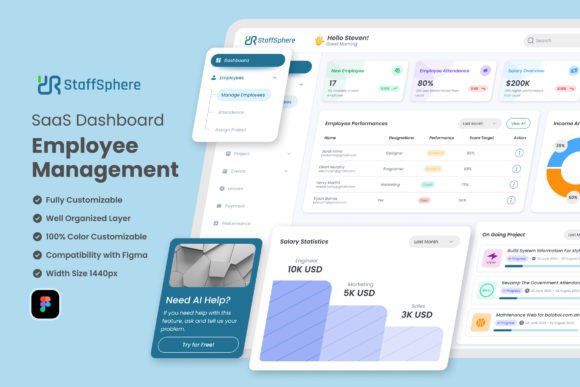
Employee Management Admin Dashboard Guide
In the fast-paced world of digital product development, the interface you build for your internal tools often determines the success of your entire operation. An Employee Management Admin Dashboard is more than just a collection of charts and tables; it is the central nervous system where data transforms into actionable insights. For professionals ranging from startup founders to enterprise project managers, having a clear, organized, and intuitive administrative panel is critical. It allows teams to monitor performance, manage resources, and streamline communication without getting lost in a sea of complex code or cluttered screens.
When you consider building a custom solution for your business, whether it is a CRM, an HRMS, or a SaaS platform, the design phase is where many projects stall. A well-structured template can bridge the gap between a raw concept and a fully functional application. By leveraging a professionally crafted Employee Management Admin Dashboard, developers and designers can focus on logic and user experience rather than starting from a blank canvas. This approach saves valuable time and ensures that the final product meets high standards of usability and aesthetics.
Why a Structured Dashboard Matters for Your Business
The primary value of a dedicated admin dashboard lies in its ability to simplify decision-making. In a corporate environment, leaders need to see employee status, project timelines, and support tickets at a glance. Without a cohesive design, this information becomes fragmented across different tools, leading to inefficiency and potential errors. A unified Employee Management Admin Dashboard consolidates these elements into a single view, allowing stakeholders to identify trends and address issues immediately.
Consider a scenario where a manager needs to review team availability for an upcoming sprint. In a disorganized system, they might have to check email, a separate calendar app, and a spreadsheet. With a robust dashboard featuring integrated calendar views and mail notes, all this information is accessible within one screen. This reduction in context switching not only speeds up workflows but also reduces cognitive load, enabling the team to stay focused on high-value tasks. The result is a more agile organization capable of responding quickly to market changes.
Design Flexibility for Diverse Applications
One of the most significant advantages of using a professional template is its versatility. While the core concept revolves around employee management, the underlying structure supports a wide array of web applications. Whether you are developing a custom CMS, a social support portal, or an e-commerce backend, the foundational layout remains relevant. The key is how easily the design adapts to specific branding and functional requirements.
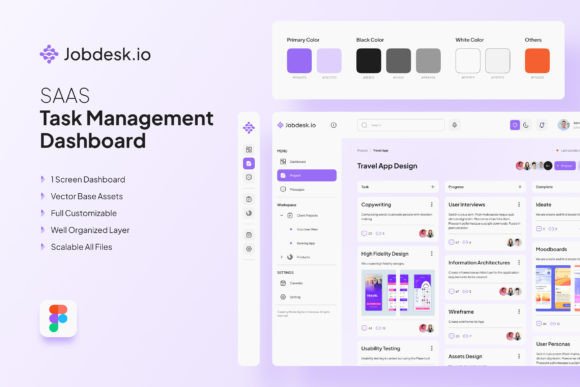
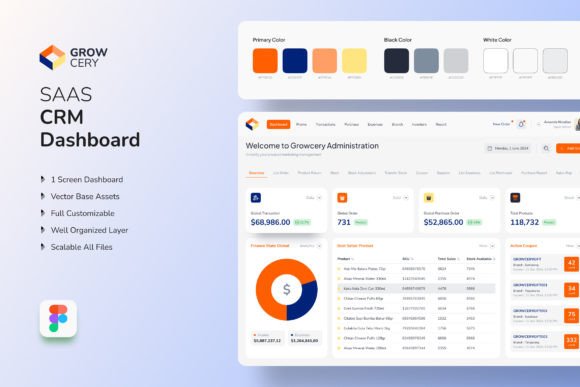
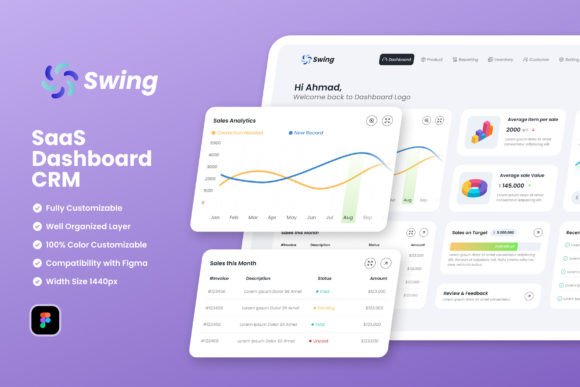
A high-quality Employee Management Admin Dashboard created in Figma offers this adaptability through clean organization and vector shapes. Because the file is fully layered and uses free Google Fonts, you can modify colors, assets, and effects without compromising the integrity of the design. This is particularly useful for agencies working with multiple clients who have distinct brand identities. Instead of redesigning every element from scratch, you can simply adjust the color palette and swap out icons to match the client's guidelines. This flexibility ensures that the final product feels bespoke while maintaining the efficiency of a reusable framework.
Streamlining Development with Clean Assets
For developers and UI/UX designers, the technical specifications of a design file are just as important as its visual appeal. A template that is Retina Ready and set to 150 dpi ensures that the interface looks sharp on modern high-resolution displays. This attention to detail prevents the blurry or pixelated look that can undermine user trust in a professional application.
Furthermore, the use of vector shapes means that icons and graphical elements can be scaled indefinitely without loss of quality. When you are working on a responsive design that must work on everything from large desktop monitors to compact tablets, vectors provide the necessary scalability. The RGB color mode ensures accurate color representation across different devices, which is crucial for maintaining brand consistency. These technical features make the Employee Management Admin Dashboard a practical choice for serious development projects where quality cannot be compromised.
Enhancing Collaboration and Communication
Beyond individual productivity, an effective dashboard fosters better collaboration within teams. Features like integrated mail notes and calendar views facilitate seamless communication. In a remote or hybrid work environment, keeping everyone aligned is challenging. A shared visual interface helps bridge the gap by providing a common ground for updates and notifications.
Imagine a support team managing customer inquiries. With a dashboard that includes a dedicated mail note section, agents can track conversations and assign tasks without leaving their workflow. This integration reduces the risk of missed messages and ensures that no request falls through the cracks. Similarly, the calendar component allows teams to visualize deadlines and meetings, making it easier to coordinate efforts and avoid scheduling conflicts. These small but powerful features contribute to a smoother operational flow and a more cohesive team dynamic.
Who Benefits Most from This Approach?
The utility of a versatile Employee Management Admin Dashboard extends across various roles and industries. Entrepreneurs launching a new SaaS product will find it invaluable for creating a Minimum Viable Product (MVP) quickly. By starting with a solid design foundation, they can launch sooner and gather user feedback without spending months on UI development. Freelancers and small agency owners can also benefit by offering higher-quality designs to their clients without the overhead of hiring a full-time design team.
Corporate IT departments and HR managers are another key demographic. They often require robust systems to handle sensitive employee data and complex organizational structures. A clean, organized dashboard simplifies the management of these responsibilities, reducing the likelihood of administrative errors. Educators and publishers managing content platforms will appreciate the ease of customizing the interface to fit their specific content management needs. Essentially, anyone involved in building or managing a web-based application stands to gain from a well-designed, flexible template.
Practical Considerations and Limitations
While templates offer significant advantages, it is important to understand their limitations. The images included in preview files are for demonstration purposes only and are not part of the download. Users should be prepared to source their own stock photography or illustrations if they wish to populate the dashboard with realistic content. Additionally, while the template provides a strong structural base, it does not include the backend logic or database connections required for a fully functional application.
Developers must still write the code to make the dashboard interactive and connected to real data. However, this separation of concerns is actually a benefit. It allows designers to focus purely on the visual layer while developers handle the functionality. Before committing to a specific template, users should compare options to ensure the layout aligns with their specific feature requirements. For instance, if your application requires complex data visualization beyond standard charts, you may need to customize the graph components further.
Maximizing Efficiency in Your Projects
Ultimately, the goal of using a professional Employee Management Admin Dashboard is to maximize efficiency and minimize friction in your development process. By starting with a file that is 1920 w × 1665 h px and meticulously organized, you eliminate the guesswork associated with layout and spacing. The clear labeling of layers and documents ensures that even junior designers can navigate the file with confidence, reducing the learning curve for new team members.
This efficiency translates directly into cost savings and faster time-to-market. In a competitive landscape, being able to deploy a polished, professional-looking admin panel quickly can give you a significant edge over competitors who are still struggling with basic design decisions. Moreover, the ability to easily change colors, shapes, and effects means that your product can evolve alongside your brand without requiring a complete overhaul of the design system.
As you move forward with your next web application project, consider the long-term impact of your design choices. A thoughtful, adaptable dashboard not only serves immediate needs but also lays the groundwork for future growth and scalability. Whether you are building a personal business tool or a large-scale corporate system, investing in a high-quality design resource is a strategic move that pays dividends throughout the lifecycle of your product.