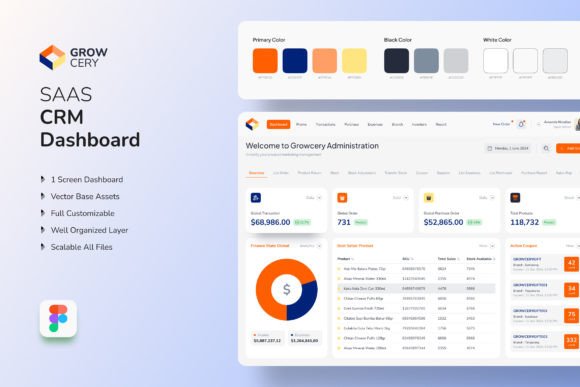
CRM System Admin Dashboard: A Comprehensive Evaluation
In the landscape of modern web application development, the administrative interface serves as the command center for data management and operational oversight. Among the various types of interfaces available, the CRM System Admin Dashboard stands out as a critical component for businesses managing customer relationships. Whether utilized within a Customer Relationship Management (CRM) platform, a Content Management System (CMS), or a broader Software as a Service (SAAS) environment, the quality of this dashboard directly impacts user efficiency and decision-making capabilities. This article explores the functionality, design considerations, and strategic value of a well-structured CRM System Admin Dashboard to assist stakeholders in making informed decisions.
Defining the CRM System Admin Dashboard
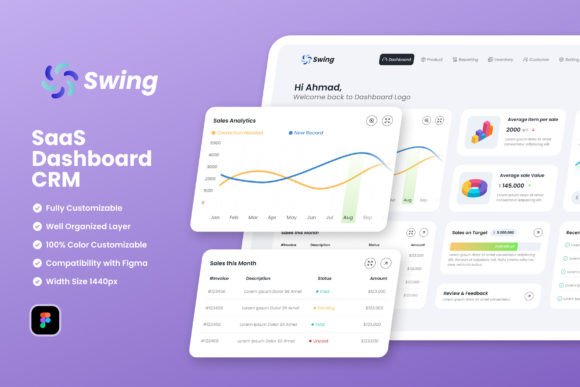
A CRM System Admin Dashboard is a centralized graphical interface that allows administrators to monitor, manage, and configure the core functions of a customer relationship system. Unlike standard user views, which are often limited to specific tasks like logging a call or viewing a contact profile, the admin dashboard provides a holistic view of the entire ecosystem. It aggregates data from sales pipelines, support tickets, marketing campaigns, and user activity logs into a single, coherent display.
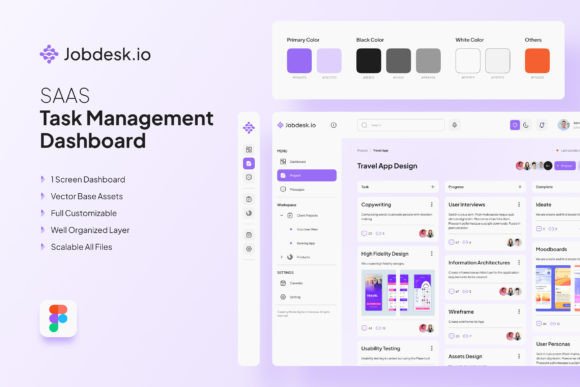
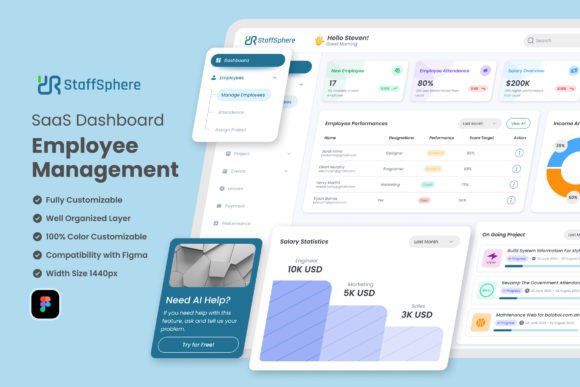
Beyond simple data visualization, a robust admin dashboard includes tools for system configuration, such as setting user permissions, customizing workflows, and integrating third-party applications. In the context of professional design, these dashboards are often created using industry-standard tools like Figma. These designs prioritize clarity and organization, ensuring that complex data sets are presented through clean, layered vector shapes and intuitive layouts. The goal is to reduce cognitive load, allowing administrators to identify trends and resolve issues rapidly.
Why Evaluate a Custom Admin Dashboard?
Organizations may seek to evaluate or implement a new CRM System Admin Dashboard for several practical reasons. As businesses scale, legacy systems often become cluttered and inefficient, leading to decreased productivity. A modern dashboard addresses these pain points by offering a streamlined experience tailored to specific operational needs. For instance, an HRMS (Human Resource Management System) or an e-commerce platform might require unique metrics that generic software fails to highlight effectively.
Furthermore, the shift toward remote work and distributed teams has increased the demand for accessible, responsive interfaces. Administrators need to access critical information from various devices without compromising on visual fidelity. High-resolution, retina-ready designs ensure that charts, calendars, and mail notes remain legible across different screen sizes. Additionally, the ability to customize color schemes and assets allows organizations to maintain brand consistency across their digital properties, reinforcing a professional image for internal users and external stakeholders alike.
Benefits and Strategic Advantages
The primary advantage of investing in a high-quality CRM System Admin Dashboard is improved operational efficiency. By consolidating essential tools—such as calendar scheduling, email management, and data analytics—into one view, administrators can perform multiple tasks without navigating through disparate menus. This reduction in navigation time translates directly into cost savings and faster response times for customer inquiries.
Design flexibility is another significant benefit. Professional templates created with fully layered files allow developers to modify elements easily. If a business decides to pivot its strategy or rebrand, the underlying structure of the dashboard can be adapted without requiring a complete rebuild. Features such as RGB color mode compatibility and the use of free Google Fonts ensure that the final product is both visually appealing and technically compatible with modern web standards. Moreover, a clean, organized file structure facilitates collaboration between designers and developers, reducing the likelihood of errors during the implementation phase.
Tradeoffs and Considerations
While the benefits are substantial, there are tradeoffs to consider when selecting or designing a CRM System Admin Dashboard. One major consideration is the initial investment required for customization. Although many templates offer easy-to-change colors and effects, achieving a truly bespoke solution that aligns perfectly with complex business logic may require additional development time. Organizations must weigh the speed of deployment against the depth of customization needed.
Another factor is the learning curve. A highly feature-rich dashboard, while powerful, can overwhelm new users if not designed with intuitive usability in mind. Even with a clean layout, administrators must be trained to interpret the data correctly and utilize advanced features effectively. Additionally, reliance on specific design assets or fonts means that changes in external resources could impact the long-term maintenance of the interface. It is crucial to ensure that all dependencies, such as font libraries or icon packs, are stable and widely supported.
Situations Where a Custom Dashboard Fits Best
A dedicated CRM System Admin Dashboard is particularly well-suited for organizations with unique data requirements that off-the-shelf solutions cannot meet. Startups building a SAAS product, for example, often need a dashboard that reflects their specific value proposition and user journey. Similarly, corporate enterprises managing large-scale operations may require granular control over user roles and data visualization that standard packages do not provide.
This approach is also ideal for projects where brand identity is paramount. Companies that prioritize a cohesive visual experience across all touchpoints will find that a custom-designed dashboard enhances the overall user experience. Furthermore, situations involving sensitive data or strict compliance requirements benefit from a tailored interface where security protocols and data access levels can be precisely configured from the ground up.
When Alternatives May Be Worth Considering
Despite the advantages of customization, there are scenarios where alternative approaches might be more practical. Small businesses with limited budgets and straightforward operational needs may find that pre-built, subscription-based CRM platforms offer sufficient functionality without the overhead of custom design and development. In these cases, the cost of creating a bespoke dashboard might outweigh the immediate benefits.
Additionally, if a project requires rapid deployment with minimal technical involvement, relying on established CMS or SAAS solutions with built-in admin panels could be more efficient. These platforms often come with extensive documentation, community support, and regular updates, reducing the burden on internal IT teams. For organizations lacking in-house design or development resources, the complexity of managing a custom Figma-to-code workflow might introduce unnecessary risks and delays.
Practical Decision-Making Insights
To determine whether a custom CRM System Admin Dashboard aligns with your goals, begin by auditing your current workflow. Identify bottlenecks, missing features, and areas where data visualization falls short. If you find that existing tools force you to work around limitations rather than solving problems efficiently, a custom solution may be justified.
Next, assess your technical capacity. Do you have the resources to manage design files, coordinate with developers, and maintain the interface over time? If the answer is yes, look for templates that are fully layered, organized, and compatible with your tech stack. Ensure that the design supports high-resolution displays and offers flexibility in terms of color and asset management. Finally, consider the long-term scalability of the solution. A well-architected dashboard should grow with your business, accommodating new features and data points without becoming unwieldy.
Ultimately, the decision to adopt a CRM System Admin Dashboard should be driven by a clear understanding of your operational needs and strategic objectives. By balancing the desire for customization with the realities of budget and resource availability, organizations can select a solution that enhances productivity and supports sustainable growth.