Artificial Intelligence Icons: The Visual Language of Tomorrow
In the rapidly evolving landscape of digital communication, visual elements serve as the bridge between complex technological concepts and human understanding. As artificial intelligence permeates every sector of modern life, from healthcare diagnostics to autonomous transportation, the need for clear, recognizable, and versatile symbols has never been more critical. This is where high-quality Artificial Intelligence Icons become indispensable tools for designers, developers, and content creators. These are not merely decorative graphics; they are functional assets that convey meaning instantly, reducing cognitive load and enhancing user experience across web platforms, mobile applications, and marketing materials.
The Critical Role of Vector Graphics in Modern Design
When discussing digital assets, the distinction between raster and vector formats is fundamental to professional execution. Raster images, composed of a fixed grid of pixels, often lose clarity when scaled up, resulting in jagged edges and blurriness. In contrast, vector design elements are mathematical descriptions of shapes, lines, and curves. This mathematical foundation allows them to be resized infinitely without any loss of quality. For professionals integrating Artificial Intelligence Icons into their projects, this scalability is a non-negotiable requirement.
Consider a scenario where a designer needs to use an AI symbol on a small mobile app button and then again on a massive billboard or a 4K presentation screen. A standard image file might look acceptable at one size but fail miserably at another. However, a vector file ensures crisp, clean lines regardless of the output medium. The specific asset collection available today addresses this need by providing transparent image files in both EPS and PNG formats. The EPS format serves as the master vector file, editable in professional software like Adobe Illustrator or CorelDRAW, while the PNG version offers immediate usability with transparency support for quick web deployment.
Resolution and Clarity: Beyond Standard Definitions
Even within the realm of raster outputs derived from vectors, resolution matters immensely. High-resolution assets ensure that when an icon is exported for print or high-density displays, it retains its sharpness. The current standard for premium digital assets includes resolutions of 300 dpi (dots per inch), which is the industry benchmark for professional printing. Furthermore, dimensions such as 4000 x 4000 pixels provide a substantial canvas for intricate details. This level of detail is crucial for Artificial Intelligence Icons, which often feature complex circuitry patterns, neural network nodes, or abstract representations of data flow. At lower resolutions, these fine details can merge into indistinct blobs, destroying the intended aesthetic and semantic value of the graphic.
Decoding the Semantics of AI Symbolism
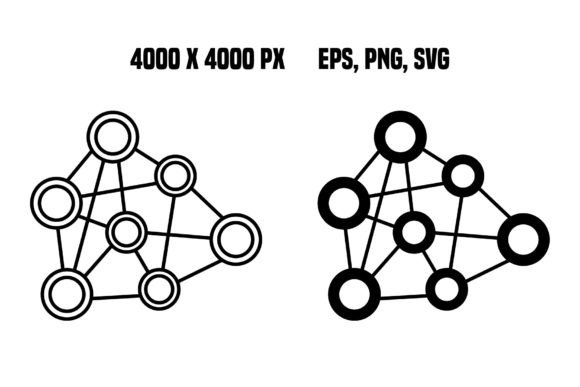
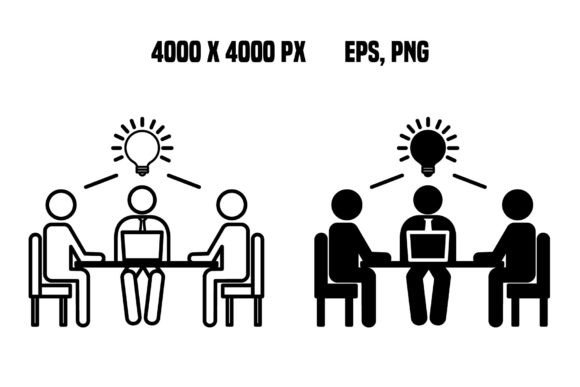
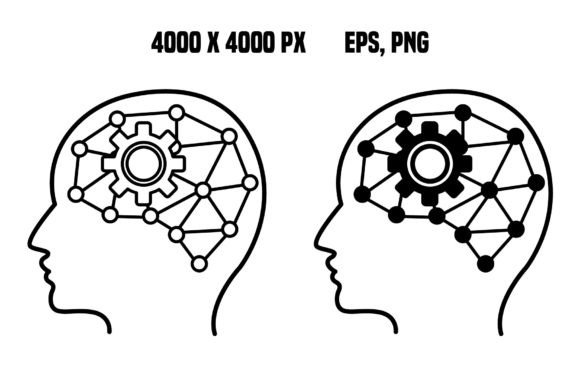
Designing effective icons requires a deep understanding of what users associate with artificial intelligence. Unlike generic technology symbols, AI imagery must communicate intelligence, automation, learning, and connectivity. Common motifs include stylized brains overlaid with circuit boards, interconnected nodes representing neural networks, and robotic hands interacting with digital interfaces. These symbols act as a universal shorthand, allowing a user to immediately identify a section of a website dedicated to machine learning algorithms or an automated service.
The versatility of a well-curated set of Artificial Intelligence Icons lies in their ability to adapt to different brand identities. A fintech company might prefer sleek, minimalist lines to suggest precision and speed, while a research institution might opt for more organic, flowing shapes to represent the evolution of learning systems. By offering multiple vector design elements, a comprehensive ZIP file allows creators to select the style that best aligns with their specific narrative. Whether the goal is to evoke trust, innovation, or futuristic capability, the right icon sets the tone before a single word is read.
Practical Applications Across Industries
The utility of high-quality AI visuals extends far beyond simple decoration. They play a pivotal role in user interface (UI) and user experience (UX) design, guiding users through complex systems with intuitive cues. Let us explore how various sectors leverage these assets to enhance their digital presence.
- Web Development and SaaS Platforms: Software companies specializing in AI-driven analytics or cloud computing rely heavily on icons to label features. A dashboard filled with text can be overwhelming; replacing labels with clear Artificial Intelligence Icons creates a cleaner, more navigable interface. The transparency of PNG files allows these icons to sit seamlessly over gradients or dark mode backgrounds without unsightly white boxes.
- Educational Content and Research: Educators and researchers often create presentations or interactive modules to explain complex topics like deep learning or natural language processing. Using high-resolution 4000 x 4000 pixel images ensures that these concepts remain legible even when projected in large lecture halls. The vector nature of the files also allows instructors to modify colors to match their institutional branding.
- Marketing and Branding: For business owners launching new AI products, the visual identity is paramount. Marketing collateral, including brochures, social media posts, and email campaigns, benefits from consistent, high-impact imagery. The ability to scale these graphics from a thumbnail ad to a full-page magazine spread without quality degradation makes vector assets a cost-effective investment for long-term branding strategies.
- App Development: Mobile applications require assets that look sharp on Retina and OLED screens. The 300 dpi resolution ensures that icons remain crisp on high-density displays, contributing to a premium feel. Developers appreciate the inclusion of both EPS and PNG formats, as it streamlines the workflow between design and coding phases.
Optimizing Workflows with Comprehensive Asset Packs
Efficiency is a cornerstone of professional creativity. Time spent searching for individual images or struggling with low-quality downloads detracts from the core creative process. A consolidated resource, such as a ZIP file containing a curated selection of Artificial Intelligence Icons, significantly accelerates project timelines. Instead of piecing together disparate elements from various sources, designers can access a cohesive set of vector design elements that share a consistent style and quality standard.
The inclusion of transparent image formats is particularly valuable for composite work. When placing an icon over a busy background, a solid square border can ruin the composition. Transparency allows the icon to blend naturally with the surrounding environment. Additionally, having the source vector file (EPS) means that if a client requests a color change or a slight modification to a shape, the designer can make those adjustments instantly without needing to redraw the entire graphic from scratch. This flexibility is essential in a fast-paced industry where requirements often shift mid-project.
Technical Considerations for Implementation
While the visual appeal is obvious, the technical specifications of these files are equally important for SEO and performance. Web pages loaded with heavy, unoptimized images suffer from slow load times, which can negatively impact search engine rankings and user retention. However, vector-based icons, when properly converted to SVG for web use, offer a tiny file size with infinite scalability. Even when using the provided high-resolution PNGs, the 4000 x 4000 pixel count provides enough buffer that designers can downscale the image for web use without losing quality, ensuring optimal performance.
Furthermore, the semantic richness of these icons contributes to accessibility. When paired with appropriate alt text, Artificial Intelligence Icons help screen readers describe the function of a button or section to visually impaired users. This alignment with accessibility standards is not just a legal requirement in many jurisdictions but a moral imperative for inclusive design. By choosing clear, universally understood symbols, creators ensure that their digital products are usable by the widest possible audience.
The Future of Digital Iconography
As artificial intelligence continues to advance, so too will the visual language used to represent it. We are moving away from clichéd robot heads toward more abstract, dynamic representations of data synthesis and cognitive processes. The demand for diverse, high-quality Artificial Intelligence Icons will only grow as the technology becomes more integrated into daily life. From smart home devices to personalized healthcare assistants, the need for intuitive visual cues remains constant.
Investing in premium assets today prepares creators for the challenges of tomorrow. The availability of high-resolution, scalable, and transparent formats ensures that designs remain relevant and adaptable. Whether you are a hobbyist experimenting with a personal blog or a business owner launching a global platform, the quality of your visual assets reflects the quality of your ideas. In a world saturated with information, clarity is king, and the right icon can be the key that unlocks understanding.
Thank you for visiting the store and exploring the potential of these powerful design tools. By incorporating these vector design elements into your workflow, you are not just adding graphics to a page; you are enhancing communication, improving user experience, and staying ahead of the curve in the digital age. The journey of translating complex technology into simple, elegant visuals begins with the right resources, and these Artificial Intelligence Icons are designed to empower your next great creation.