The Art and Utility of Ink Vegetable Sketches for Modern Design
In the world of graphic design, there is a timeless appeal to the hand-drawn aesthetic. It brings warmth, authenticity, and a human touch that digital perfection often lacks. This is precisely why Ink Vegetable Sketches have become a staple for designers working in food, agriculture, and lifestyle sectors. These collections offer more than just images; they provide a visual language that speaks directly to consumers looking for organic, farm-to-table quality. When you integrate these sketches into your projects, you are tapping into a tradition of botanical illustration while meeting modern design demands.
The Charm of Hand-Drawn Botanical Illustrations
There is a distinct difference between a high-resolution photograph and a carefully rendered ink drawing. A photograph captures a specific moment in time, often with lighting and angles that can feel sterile or overly commercial. In contrast, an ink vegetable sketch captures the essence of the subject. The varying line weights, the texture of the pen on paper, and the artistic interpretation create an emotional connection.
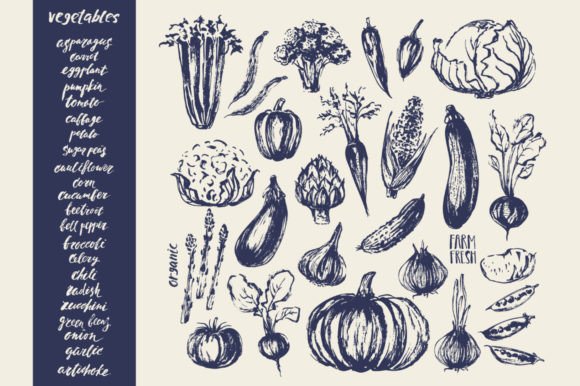
This collection features 23 distinct types of vegetables, each meticulously drawn to highlight its unique characteristics. From the delicate fronds of asparagus to the rugged texture of a pumpkin, every element tells a story. The inclusion of handwritten names adds another layer of charm, mimicking the signage found at local farmers markets or the labels on artisanal jars. This attention to detail transforms a simple image into a narrative device, suggesting freshness, care, and natural origins without saying a word.
A Comprehensive Collection for Every Project
One of the most significant advantages of this specific set is its breadth. Designers often struggle to find cohesive sets that cover a wide range of produce without clashing styles. This collection solves that problem by offering a unified look across 23 varieties. The list includes staples like the tomato, potato, onion, and carrot, alongside more specialized items such as artichoke, beetroot, and eggplant.
The variety ensures that whether you are designing a menu for a fine dining restaurant featuring seasonal greens or creating packaging for a bulk organic grain mix, you will find the right elements. The set covers:
- Root Vegetables: Carrot, radish, beetroot, and potato.
- Leafy Greens and Cabbages: Cabbage, cauliflower, broccoli, and celery.
- Fruiting Vegetables: Tomato, bell pepper, cucumber, zucchini, pumpkin, and eggplant (aubergine).
- Legumes and Pods: Sugar peas, green beans, and corn.
- Aromatics and Spices: Garlic, chilli, and onion.
Having all these objects available in one file streamlines the workflow significantly. Instead of hunting for individual assets that might differ in style or resolution, designers have a complete toolkit ready to deploy.
Technical Flexibility: EPS10 and Vector Advantages
For professional applications, the format of the asset is just as critical as the artwork itself. This collection is provided as an EPS10 vector file. This technical specification is crucial for several reasons. Vectors are mathematical representations of graphics, meaning they can be scaled infinitely without losing quality. Whether you need a tiny icon for a mobile app or a massive banner for a grocery store window display, the lines remain crisp and clean.
The EPS10 format ensures compatibility with industry-standard software like Adobe Illustrator, CorelDRAW, and InDesign. This allows designers to manipulate the sketches easily. You can change colors to match a brand palette, separate layers to isolate specific vegetables, or combine multiple sketches to create complex compositions. For example, you might group a bunch of sugar peas with a single chilli to create a logo for a spicy pea soup brand. The flexibility of the vector format turns static images into dynamic design elements.
Additionally, the inclusion of a JPG preview is a practical consideration for quick mockups and presentations. While the vector file is for final production, the JPG allows stakeholders to visualize the concept rapidly before committing to the full design process. This dual-format delivery caters to both speed and precision in the creative workflow.
Applications in Packaging and Branding
Packaging design is perhaps the most impactful arena for Ink Vegetable Sketches. In a crowded marketplace, products need to stand out on the shelf. The "organic" and "natural" trends have shifted consumer preferences away from glossy, hyper-realistic photos toward more rustic, authentic visuals. A label featuring a hand-drawn cauliflower or zucchini immediately signals that the product inside is wholesome and unprocessed.
Consider a brand launching a line of dried vegetable chips. Using these sketches allows for a playful yet sophisticated design. The artist can arrange the pumpkin, cucumber, and bell pepper around the typography, creating a border that feels handmade. The handwritten names included in the set can be used as decorative accents, reinforcing the idea of small-batch production. This approach works equally well for fresh produce bags, juice boxes, or even gourmet spice blends where the garlic and chilli sketches serve as flavor indicators.
Enhancing Culinary and Garden Projects
Beyond commercial packaging, these sketches are invaluable for culinary and gardening enthusiasts. Chefs and food bloggers often need imagery that complements their recipes without overpowering the text. A photo of a dish can sometimes distract from the instructions, but a subtle ink sketch of the main ingredient—say, an asparagus spear or a green bean pod—adds context and elegance.
For gardeners, these illustrations are perfect for planning sheets, seed packet designs, or educational materials. Imagine a community garden newsletter using these vectors to illustrate planting guides. The clear, distinct shapes of the onion, potato, and carrot make it easy for readers to identify crops. The artistic nature of the drawings also makes the content more engaging, encouraging people to learn about growing their own food.
Stationery and Digital Media
The versatility of Ink Vegetable Sketches extends to stationery and web design. Planners, journals, and notebooks often feature themes related to wellness and cooking. Incorporating these sketches into page dividers or bullet points creates a cohesive aesthetic for users who track their meals or garden progress.
On the web, these assets are lightweight and scalable, making them ideal for responsive design. A website for a local farmers market can use the radish and beetroot sketches as section headers or background patterns. Because they are vectors, they load quickly and render sharply on high-DPI screens, ensuring a professional user experience. They also work beautifully in social media graphics, where the hand-drawn style helps brands appear more approachable and relatable compared to corporate stock photography.
Why Choose Hand-Drawn Over Stock Photos?
When deciding on visual assets, many designers weigh the pros and cons of photography versus illustration. While photos offer realism, they come with limitations regarding lighting, background removal, and consistency. Matching a photo of a broccoli taken in morning light with a photo of a tomato taken at noon can result in a disjointed visual identity.
Ink Vegetable Sketches eliminate this inconsistency. Since every item in the set is drawn in the same style with the same tools, they blend seamlessly together. You can mix a celery stalk with a pumpkin without worrying about color temperature mismatches or shadow directions. Furthermore, the illustrative style allows for creative freedom. You can exaggerate certain features, add whimsical details, or simplify the forms to fit a minimalist layout, options that are not possible with a fixed photograph.
From an SEO perspective, using custom illustrations also offers unique opportunities. Unlike generic stock photos that might be used by thousands of other websites, these specific sketches can be part of a unique brand identity. When paired with descriptive alt text and relevant keywords, they help search engines understand the context of your content, whether it's a blog post about "growing organic carrots" or a product page for "handmade vegetable soap."
Final Thoughts on Implementation
Integrating Ink Vegetable Sketches into your design workflow is a strategic move that bridges the gap between traditional art and modern digital needs. The combination of 23 diverse vegetable types, handwritten typography, and high-quality vector formats provides a robust foundation for any project involving food, nature, or sustainability.
Whether you are a packaging designer looking to launch a new organic brand, a chef updating a menu, or a gardener creating educational resources, these sketches offer the perfect balance of functionality and aesthetics. They remind us that even in a digital age, the human touch remains the most powerful tool for connecting with an audience. By choosing these hand-drawn elements, you are not just decorating a page; you are enhancing the story of the food and the land it comes from.