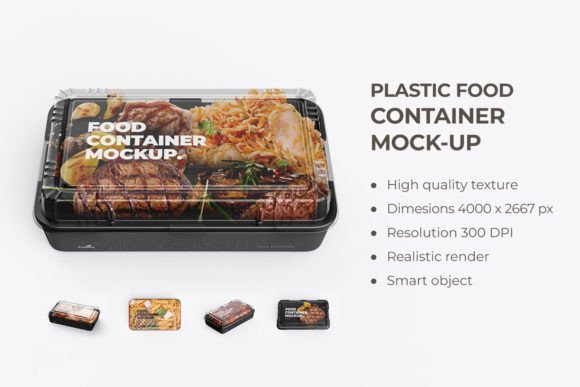
Revolutionizing Ready Meal Branding with the Food Container PSD Mockup
In the competitive landscape of the ready-to-eat meal industry, visual presentation is often the deciding factor between a customer clicking "add to cart" or scrolling past. The bridge between a digital design concept and a tangible product perception is built on high-fidelity visualization tools. Among these, the Food Container PSD Mockup for Ready Meal stands out as a critical asset for designers, brand managers, and marketing teams. This tool allows professionals to unveil culinary design discoveries and box cover ideas in a spectacular way, transforming flat vector files into lifelike representations that resonate with consumers.
The modern consumer expects transparency and quality before ever tasting a product. They judge freshness, portion size, and brand reliability through imagery alone. A generic placeholder image fails to convey the texture of a foil seal, the gloss of a plastic lid, or the matte finish of an eco-friendly paperboard container. By utilizing premium photorealistic product mockups, brands can render their logo, art, and various other design elements flawlessly across different styles and materials. This capability ensures that the visual narrative aligns perfectly with the actual physical experience of the product.
The Critical Role of Photorealism in Food Packaging Design
When discussing food packaging design, the margin for error in visual communication is non-existent. Unlike abstract tech products where sleek lines suffice, food items require a sensory translation through visuals. The human brain associates specific textures and lighting conditions with taste and temperature. A steamy burger needs to look hot; a salad needs to look crisp and fresh. This is where customizable branding mockups become indispensable.
The Food Container PSD Mockup for Ready Meal provided by RAM STUDIO addresses this need by offering a set of unparalleled, high-resolution templates. These are not merely background images; they are complex compositions designed to simulate real-world physics. Shadows fall naturally around the rim of the container, light reflects off the condensation on a cold drink cup, and the curvature of a round tub distorts the label graphics exactly as it would in reality. This level of detail creates a sense of trust. When a potential customer sees a marketing graphic that looks indistinguishable from a photograph, the perceived value of the brand increases significantly.
Furthermore, the ability to tailor these PSD mockups to harmonize with a brand's visual appeal reinforces a uniform and professional image. Consistency is the cornerstone of brand recognition. Whether a company is launching a new line of organic soups or a premium steak dinner, the packaging must communicate the same core values. Using a standardized set of mockups ensures that every piece of marketing paraphernalia, from social media posts to billboards, maintains a cohesive aesthetic identity.
Technical Specifications That Drive Quality
For designers working in professional environments, technical specifications are just as important as aesthetic appeal. The RAM STUDIO collection boasts dimensions of 4000 px X 2667 px at an optimal resolution of 300 pixels per inch. This high resolution is crucial for print ads and large-format displays where pixelation can destroy credibility. It allows for close-up cropping without losing detail, enabling marketers to highlight specific features like nutritional information panels or ingredient lists with crystal clarity.
The user-friendly smart object feature within these templates streamlines the workflow considerably. Instead of manually warping and masking designs onto curved surfaces—a time-consuming process prone to errors—designers can simply double-click the smart object layer, drop in their artwork, save, and watch the software automatically apply perspective, lighting, and texture adjustments. This efficiency means more time can be spent on creative strategy rather than technical manipulation.
Strategic Applications Across Marketing Channels
The versatility of these food product visuals extends far beyond simple product photography. They serve as the backbone for a multi-channel marketing strategy. From snazzy web graphics to eye-catching social media illustrations, the adaptability of the PSD Food Container Mockup ensures that a brand remains visible and engaging across all touchpoints.
Elevating Website and E-Commerce Presence
In the realm of e-commerce, website mockups are the primary salesperson. High-quality images reduce bounce rates and increase conversion metrics. When a user lands on a landing page featuring a ready meal, the imagery must immediately answer questions about portion size and ingredients. By using photorealistic product mockups, businesses can create dynamic hero sections that capture attention instantly. The ability to showcase the product in various contexts—such as on a wooden table, in a kitchen setting, or against a clean studio background—allows for A/B testing different visual narratives to see what resonates best with the target audience.
Social Media Visuals and Engagement
Social media platforms thrive on visual storytelling. Platforms like Instagram and Pinterest are highly saturated, making it difficult for brands to stand out. Generic stock photos often fail to engage users because they lack authenticity. Customizable branding mockups allow creators to generate unique content that fits seamlessly into a feed. For instance, a brand can create a carousel post showing the unboxing experience, starting with the sealed container and moving to the open meal, all rendered with the same high fidelity. This consistency builds a recognizable brand language that followers come to expect and trust.
Product Catalogs and Print Advertising
While digital channels dominate, print advertising and physical product catalogs remain vital for many B2B food service providers and retail partnerships. The 300 DPI resolution of these PSD mockup templates ensures that when printed, the images retain their sharpness and color accuracy. Informative product catalogs used to pitch to grocery chains or restaurant distributors rely heavily on these visuals to demonstrate shelf appeal. A well-rendered mockup can show how the packaging stands out among competitors on a crowded shelf, a critical factor for retailers deciding which products to stock.
Streamlining the Creative Workflow for Professionals
For graphic designers and art directors, the integration of these tools into the daily workflow offers significant advantages. The process of creating a comprehensive brand identity involves iterating through dozens of design variations. Without efficient tools, this iteration process can be slow and costly, requiring expensive photoshoots for every minor tweak to the label design.
The Food Container PSD Mockup for Ready Meal democratizes access to professional-grade photography. Small startups and established corporations alike can leverage these assets to test concepts rapidly. If a client wants to see how a red label looks versus a blue one, or how the typography changes on a square versus a round container, the designer can make these swaps in minutes. This agility accelerates the decision-making process and reduces the time-to-market for new product launches.
Moreover, these mockups facilitate better collaboration between design and marketing teams. Instead of sending over a flat JPEG that doesn't represent the final product, designers can share realistic renders that give stakeholders a true preview of the final outcome. This shared understanding minimizes miscommunication and ensures that the final printed packaging matches the initial vision.
Enhancing Brand Awareness and Market Entry
Entering a desired market sector requires more than just a great recipe; it requires a compelling brand story. Augmenting brand awareness effectively depends on the ability to communicate that story visually. The allure of a food range is often first felt through its packaging. Freshness, quality, and care are abstract concepts that must be made concrete through design.
By underlining the prime quality and freshness of a food range through superior visuals, brands can differentiate themselves in a crowded marketplace. A premium mockup suggests a premium product. Conversely, a sloppy or low-resolution image can undermine even the highest quality ingredients. The use of life-like mockup templates signals to the consumer that the brand pays attention to detail, a trait that translates directly to trust in the food safety and preparation standards.
Whether the goal is to launch a new seasonal menu item or rebrand an existing line, the flexibility of these PSD mockup templates allows for rapid adaptation to trends. As consumer preferences shift towards sustainability, for example, brands can quickly visualize how their products look in biodegradable packaging materials, helping them gauge market reaction before committing to production costs.
Considerations for Effective Implementation
While the power of these tools is immense, successful implementation requires a thoughtful approach. Designers must consider the lighting environment of the mockup to ensure it matches the intended mood of the campaign. A bright, airy kitchen scene works well for healthy breakfast meals, while a darker, moody setting might suit gourmet dinner kits. Selecting the right context is as important as the design itself.
Additionally, maintaining color accuracy is paramount. Screen colors often differ from print colors, so designers should calibrate their monitors and understand the color profiles embedded in the PSD files. Ensuring that the vibrant greens of vegetables or the rich browns of roasted meats appear accurate helps maintain the integrity of the brand's visual identity.
Finally, while these mockups are powerful, they should complement, not replace, real photography entirely. Once a product is finalized and in production, actual photography provides the ultimate proof of quality. However, during the conceptualization, prototyping, and early marketing phases, the food branding mockup serves as an essential tool to build momentum and secure buy-in from all stakeholders.
In conclusion, the integration of high-resolution, customizable PSD mockups into the food packaging design process represents a strategic advantage for any business aiming to succeed in the ready meal sector. By leveraging these tools, brands can create a seamless visual experience that enhances marketing graphics, strengthens brand identity, and ultimately drives consumer engagement. The journey from a digital file to a market-ready product is paved with these visual milestones, ensuring that every design element contributes to a unified and professional brand image.