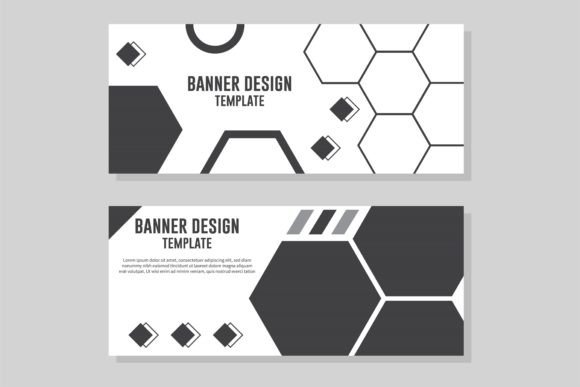
Geometric Banner Design Template: A Strategic Asset for Modern Marketing
In the fast-paced digital landscape, visual communication is the primary currency of attention. For professionals ranging from small business owners to enterprise marketers, the ability to deploy high-quality graphics quickly is not just a convenience; it is a competitive necessity. The Geometric Banner Design Template serves as a foundational tool in this ecosystem, offering a structured yet flexible approach to creating compelling web banners. Unlike static images that require complete recreation for every new campaign, these templates provide a scalable framework that integrates seamlessly into broader design workflows, ensuring consistency and efficiency without sacrificing creative control.
Understanding the Role of Geometric Templates in Your Workflow
A Geometric Banner Design Template is more than just a pre-made graphic; it is a strategic starting point for your visual identity. These designs utilize shapes, lines, and angles to create dynamic compositions that guide the viewer's eye toward key messages or calls to action. In a broader project lifecycle, these templates fit squarely into the execution phase, bridging the gap between strategic planning and final deployment. Whether you are launching a product, promoting an event, or driving traffic to a blog post, the template acts as the structural backbone upon which your specific content rests.
The value of these templates lies in their adaptability. They are designed to be fully editable vector files, meaning they do not suffer from the pixelation issues common with raster-based images when scaled. This technical advantage allows designers and non-designers alike to transform the assets to fit various dimensions—from large desktop hero banners to compact mobile ad units—without any loss in quality. By utilizing a vector-based system, you ensure that your brand looks crisp on high-resolution retina displays just as well as on standard screens.
Integration Across the Project Lifecycle
Effective use of a Web banners design template requires understanding where it fits before, during, and after a marketing initiative. Before a project begins, these templates aid in the planning stage by providing a visual reference for layout possibilities. Marketers can review the geometric structures to determine how much space is available for headlines, logos, and buttons, allowing for better copywriting and message hierarchy decisions early on. This foresight prevents the common pitfall of trying to force too much text into a confined space later in the process.
During the active creation phase, the template streamlines production. Instead of starting from a blank canvas, the user can immediately focus on customization. You can easily edit vector files in any vector graphics software, such as Adobe Illustrator, CorelDRAW, or free alternatives like Inkscape. This compatibility ensures that the asset works within your existing toolkit. During this stage, you might recolor elements to match seasonal campaigns, add new icons, or remove unnecessary shapes to declutter the design. The ability to scale up and down instantly means you can generate a full suite of banner sizes in a fraction of the time it would take to design each one individually.
After the initial launch, these templates prove invaluable for long-term maintenance and iteration. If analytics show that a specific color scheme performs poorly, you can simply adjust the hue across the entire set of banners without redrawing them. Similarly, if a campaign needs to be extended or repurposed for a different audience, the modular nature of the geometric design allows for quick updates. This longevity makes the initial investment in a high-quality template a cost-effective strategy for ongoing marketing efforts.
Practical Implementation Strategies
To maximize the utility of a Geometric Banner Design Template, consider adopting a systematic approach to editing and organization. Start by establishing a master file that contains all the base layers. When creating variations for different platforms, duplicate this master file rather than modifying the original directly. This preserves your clean source material for future projects. Within your vector software, organize layers logically—separating backgrounds, geometric shapes, text blocks, and call-to-action buttons. This organization is crucial when collaborating with team members or handing off work to developers.
When customizing the design, pay close attention to the balance between geometry and whitespace. While geometric patterns are visually engaging, they should never overpower the core message. Use the shapes to frame your content, leading the eye naturally toward the most important element, typically the headline or the button. If you decide to add text, ensure that the font weight and size are legible against the background complexity. The vector format allows you to manipulate text paths and curves, giving you the flexibility to wrap text around shapes or integrate it directly into the geometric flow.
Another practical tip involves color management. Since you can recolor without losing quality, take the time to define a specific color palette for each campaign. Save these swatches within your software so that applying them to the template is a one-click process. This ensures brand consistency across all materials. Furthermore, test your designs at different zoom levels to verify that the geometric details remain clear and do not become distracting noise when viewed on smaller devices.
Optimizing for Quality Control and Efficiency
Efficiency in design is often measured by the ratio of output to effort. A robust Web banners design template significantly improves this ratio by eliminating redundant tasks. However, maintaining quality control remains essential. Because these templates are so easy to modify, there is a temptation to over-customize, potentially diluting the original design's impact. It is important to establish guidelines for what can and cannot be changed. For instance, while changing colors is encouraged, altering the fundamental grid structure might compromise the visual harmony intended by the original designer.
Compatibility is another critical factor. Ensure that the vector files you download are saved in formats that your team's software supports, such as AI, EPS, SVG, or PDF. These formats preserve the scalability and editability of the artwork. If you need to export for web use, convert the final designs to PNG or JPEG with appropriate compression settings to balance load times with visual fidelity. The ability to transform, scale, and recolor without degradation means you can experiment with bold changes confidently, knowing that the underlying resolution will always support high-definition output.
Furthermore, consider how these templates interact with other digital assets. They should complement your website's UI, social media profiles, and email newsletters. Consistency in style creates a cohesive brand experience that builds trust with your audience. When using a geometric theme, try to echo similar shapes or line weights in your other marketing collateral. This cross-platform alignment reinforces brand recognition and makes your overall marketing strategy feel more professional and intentional.
Long-Term Value and Scalability
The true power of a Geometric Banner Design Template emerges over time. As your business grows and your marketing channels expand, the need for diverse visual assets increases. Having a library of editable templates allows you to scale your visual output alongside your business goals. You can quickly adapt to new trends, such as shifting from flat design to more complex isometric styles, by adjusting the parameters of your existing templates. This agility is crucial in a market where consumer preferences evolve rapidly.
For freelancers and agencies, these templates also serve as a way to manage client expectations and timelines. By presenting a few customized variations of a template early in the discussion, you can secure approval on the concept before investing hours in detailed execution. This collaborative approach reduces revision cycles and leads to faster project completion. Additionally, for entrepreneurs managing their own marketing, the ease of use empowers them to maintain a consistent online presence without needing to hire external designers for every minor update.
Ultimately, integrating a Geometric Banner Design Template into your workflow is about empowering creativity through structure. It removes the friction of starting from scratch, allowing you to focus on what truly matters: crafting a message that resonates with your audience. By leveraging the flexibility of vector graphics, you gain the freedom to experiment, iterate, and refine your visual communications with precision and speed. Whether you are preparing for a major product launch or simply updating your weekly newsletter, these templates provide the reliable foundation needed to execute your vision effectively.